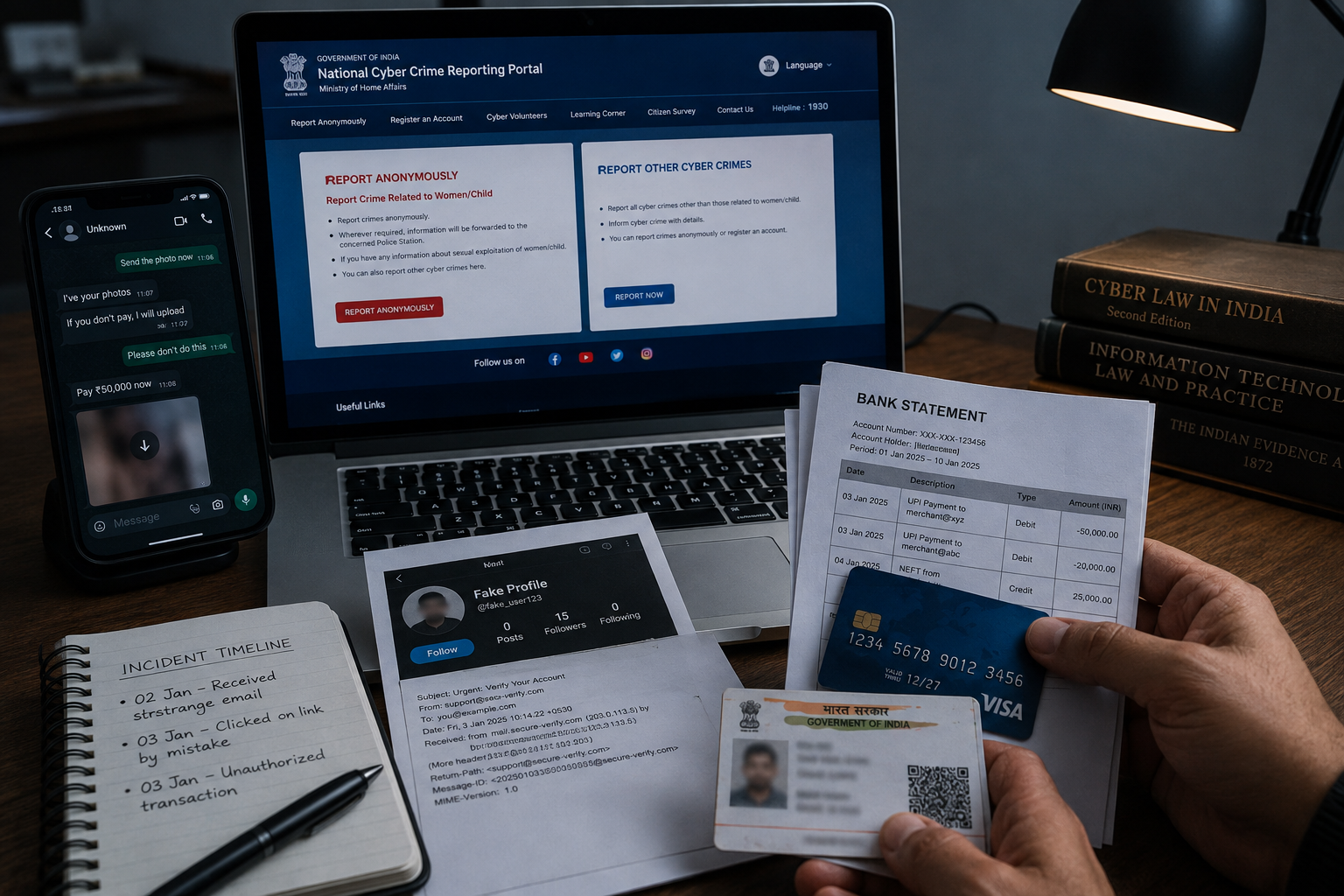
If you're planning to file a cyber crime complaint in India — whether it's fraud, harassment, a leaked photo, or a hacked account — having the right evidence ready before you start makes a real difference. A well-documented complaint moves faster and gives investigators something concrete to work with. Here's exactly what to gather.
1. Proof of Who You Are
You'll need to verify your identity as part of the complaint process:
- A government-issued photo ID (Aadhaar card, passport, PAN card, or driving license)
- An address proof (Aadhaar, voter ID, a recent utility bill, or rental agreement)
2. Evidence of the Incident Itself
This is the part that matters most, and what you collect depends on how the crime happened:
- Screenshots of the fraudulent messages, threatening chats, fake profiles, or suspicious emails involved
- URLs of any web pages, posts, or profiles connected to the incident
- Chat logs — export full conversations if the incident happened over WhatsApp, Telegram, Instagram, or similar apps, rather than just a single screenshot
- Email headers — if email was involved, the full headers (not just the message body) help investigators trace where it actually came from
3. If Money Was Involved
For any kind of financial fraud, gather:
- Bank statements or transaction receipts showing the unauthorized activity
- UPI transaction IDs or reference numbers
- Any confirmation messages from your bank or payment app
If this is financial fraud and it happened recently, time matters more than anything else on this list — call the national cybercrime helpline, 1930, as soon as possible. Reporting within 24 hours meaningfully improves the chance of freezing the transaction before the money moves further.
4. A Clear, Factual Timeline
Before you file, write out — for yourself first — exactly what happened, in order: when it started, what was said or done, and when you noticed it. The online portal typically asks for a written description of at least a couple hundred characters, so having this ready in advance saves you from trying to reconstruct it under pressure while filing.
5. If It Involves Hacking or a Compromised Account
A few extra things help investigators specifically with hacking cases:
- A copy of your original data alongside the compromised version, if you have both
- Details of who had access to the affected account or system
- Any suspects you already have reason to suspect, if applicable
Where to Actually File
You have a few real options, and they're not mutually exclusive:
- National Cyber Crime Reporting Portal — cybercrime.gov.in. There are two paths here: "Report Crime Related to Women/Child" (which allows anonymous reporting) and "Report Other Cyber Crimes." You'll register with your mobile number and an OTP, then fill in incident details, any suspect information you have, and your complaint details before submitting. You'll receive a reference number — keep it, it's how you track your case afterward.
- The 1930 helpline — best for urgent, ongoing incidents, especially financial fraud.
- Your local Cyber Crime Cell, or any police station, where you can file a First Information Report (FIR) in person. Bring physical or digital copies of everything above.
Why Gathering This Properly Matters
Investigators can only act on what you give them. A complaint with clear screenshots, timestamps, and a factual account is far more likely to be picked up quickly than a vague description alone. It also protects you — if this ever goes further legally, well-preserved evidence is what your case will actually be built on.